Five Days at 11,000 Feet
We can start this as a story about the altitude. At the airport in Lima, I was gripped by a sudden fear that I was going to develop extreme altitude sickness when I landed in Cusco. Everyone says you should ascend slowly, but I wasn’t doing that, I was going straight from sea level to 11,000 feet. I panic-bought some altitude-sickness pills and took Advil to ward off a potential headache before the short hour-long flight to Cusco.
When the flight landed, I stood up and realized I was one of the tallest people on the plane—I could see all the way down the aisle over everyone’s heads. I swear I felt for a second like something was sitting on my chest. But to my pleasant surprise, my first two days in the city passed without nausea or headache. I did sleep terribly and have weird dreams (although I am a person who has weird dreams anyway). And I was quite out of breath climbing all the stairs in the city.
Most tourists come to Cusco because of what lies outside of it: Machu Picchu, Rainbow Mountain, the Sacred Valley, and all the rest of the beautiful hiking and ruins and nature. I ended up coming to Cusco for Cusco. I am not a nature girl. This was my trip, so I was only going to do what I wanted! What did I want to do? Walk around. Learn about the city. Drink coffee and hot chocolate. Eat delicious food. Pet a llama. Sit on benches and think about life.

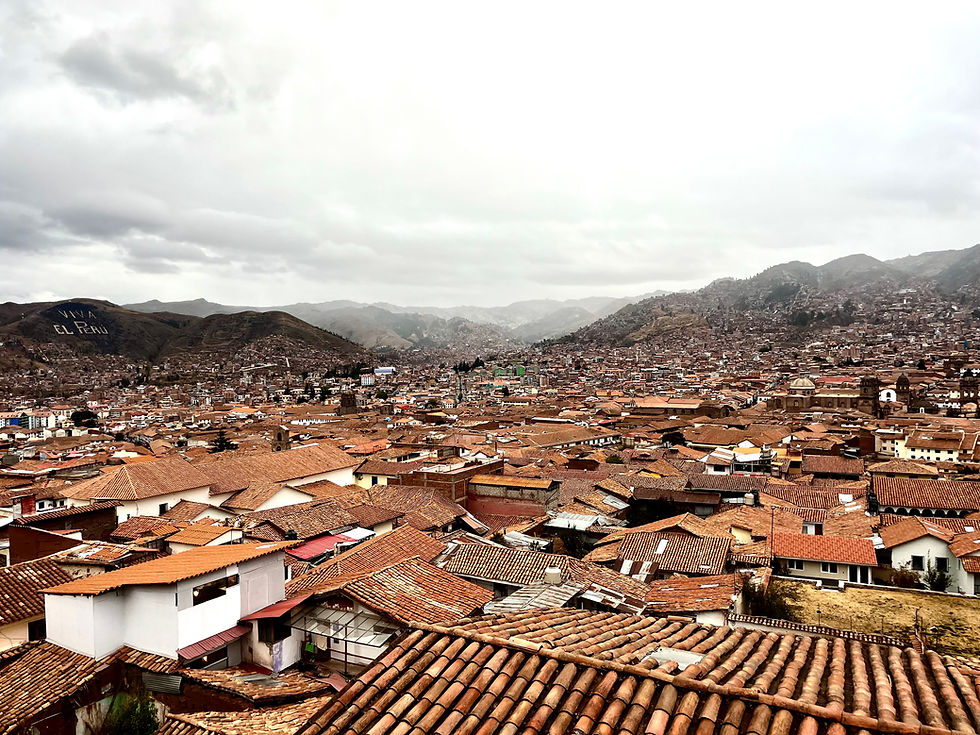
I’m happy I got to know Cusco so well. The city is nestled in a valley, spreading up the mountains like a pool of terracotta paint. The center of the city, Plaza de Armas, is a bustling square emanating out from an empty fountain, topped by a golden sculpture of an Inca king pointing towards the east. Two colonial cathedrals made of dark stone, repurposed from the Incan temples, buttress the square from two sides. The steps of the cathedral are a great place to sit and think about life. People selling paintings, jewelry, shawls, the usual fare approach anyone they think is a potential customer. A guy I met on a walking tour told me that the same people sell drugs on the square at night (I can’t confirm this, my nights were spent by the heater in my hotel room doing work). Groups of kids in school uniforms chatter by.

The roads, mostly cobblestoned, spiraling out from the main square get progressively narrower and steeper. Some roads are so narrow that you have to squeeze yourself against the wall if a car drives by, the car passing only inches from you. Dogs are everywhere, looking well-fed and well-taken-care-of, if a little dirty (hey, I’m a little dusty after a day in the city). Many have collars. They sleep on the sidewalk in the shade, sniff litter, and trot along the street, tail upright and alert. Occasionally, there will be an explosion of barking in the distance.

Tourism is the most important industry in Cusco. Countless shops sell colorful handicrafts and paintings, restaurants post their menus outside in English, and every street has a tour company offering treks to all those beautiful destinations I mentioned earlier. One tour company I passed today also offered “shamanic rituals” and ayahuasca trips (seems maybe like a bad idea…). Quechua women in traditional clothes sit on steps holding baby llamas and alpacas, offering photos. I stopped to pet one, telling the woman I didn’t have any cash to pay for a picture. She said not to worry, payment was voluntary, but I didn’t feel right taking a picture without paying, so I contented myself with scratching the little guy under the chin.
I spent my mornings in coffee shops drinking coffee that had been grown close by. I went to the same place three times, Buscando Nombre. I spent about 3 hours in that coffee shop my first day in the city, frowning at a bunch of unexpected work I’d been handed from the academic journal I edit at school. The third time I went, the owners knew my order. I bought a bag of the same beans they’d been serving me, and as I was paying, one of the owners remarked, “it will remind you of your time in Cusco!” The other café I frequented was Florencia y Fortuna, where I sipped cortados, nursed a severe stomach ache with tea, and drank the best hot chocolate I have ever had…it reminded me that cacao is a fruit! The first time I visited, I spent some time petting a little golden dog who decided he wanted to fall asleep on my feet. I felt so loved.

I visited the Inca Museum, worth a visit if you have time, and attempted to buy a ticket at the posted “international student” price. I said “I’m an international student” in Spanish and handed the old man a twenty-soles bill, expecting ten back in change, but he just handed me a ticket. I asked for “dies” but he looked at me blankly. Finally, he demanded my ticket back (it was a receipt that got crumpled in my pocket) and he looked at its crumpled state and then looked at me like I was the most disappointing thing he’d ever seen, and said something in Spanish. But finally, he handed me a student ticket and ten soles and I ran.
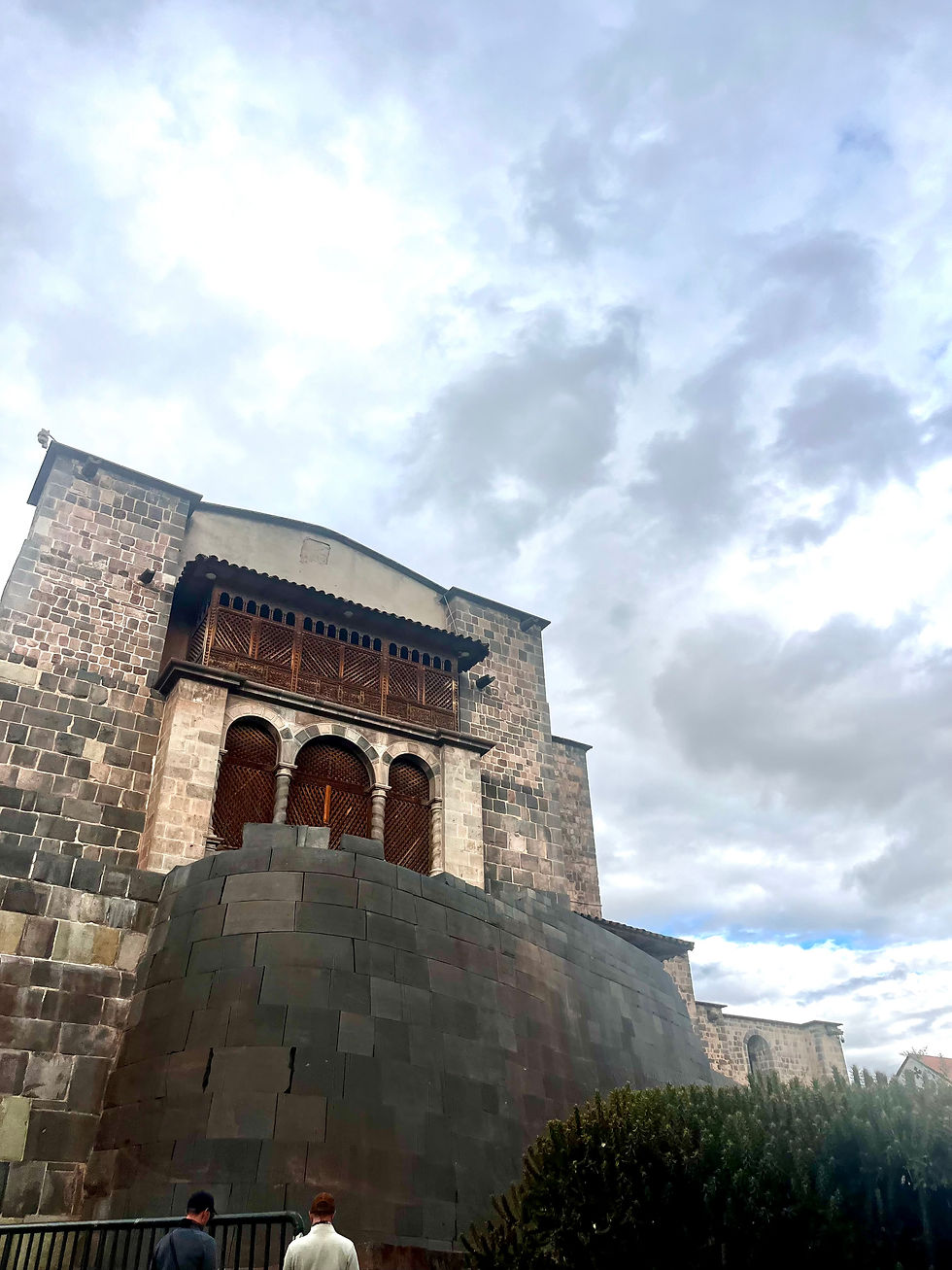
Qorikancha, which used to be one of the most important temples in Andean religious tradition and was turned into a Dominican priory, is also worth a visit. A few rooms from the old sun temple are still intact, geometrically perfect, and you can also walk around the priory and view an eclectic collection of paintings.
I visited the San Pedro Market, home to all of the food and all of the souvenirs you could ever want, after I visited Qorikancha. It’s a huge market, stuffed with stalls, with one end devoted to street food and raw meat. There were tropical fruits, wheels of soft cheese, piles of flour and different types of dried corn, stacks of coca leaves and other herbs, and stalls filled with the same kinds of souvenirs you see in the shops street and being sold on the street, but I think the prices are better. I bought small packets of toasted corn and beans as snacks. I collect little cups when I travel, so I found one at the market for about six dollars.

The streets outside the market are filled with people selling food: raw chickens, feet sticking out dramatically, a variety of colorful potatoes and corn, avocados—both green and black, unripe and ripe—and things that I thought were roasted potatoes but turned out to be roasted guinea pigs, little faces and all. I walked pretty quickly past those. But it is true that the best souvenirs to bring home from Peru are food: toasted giant corn and fried plantains, salt from the Moray salt flats (looks suspiciously like cocaine, though), chocolate bars, and coffee grown in the mountains around Cusco. The best place to buy chocolate is Casita de Chocolate, in San Blas; they have a variety of chocolate makers. I didn’t try the chocolate in San Pedro market; it was cheaper, but it looked a bit more mass-produced. Buy 70% chocolate at least, even if you aren’t a dark chocolate person, I beg you! It’s like no chocolate you’ve ever had. And the best place to buy coffee beans is a café where you loved the coffee! You can buy coffee beans at either of the two places I mentioned above.

So, if you want to do Machu Picchu, I can’t help you. But if you want to come to Cusco, I can! So, here’s my advice: bring cash and exchange it at Western Union. Pack light, but bring a warm hat and a cap with a brim. Plan on doing laundry, there are lots of places for that. Put sunscreen on your exposed skin, even if it’s cloudy or you won’t be outside for long. I hate sunscreen, but believe me, it’s necessary because the sun is no joke. An hour in direct sunlight and my neck was fried. Uber is cheap, easy, and reliable, and you can pay with a card. You can’t drink the tap water (it’s okay for showering and brushing your teeth), so buy bottled water, and drink lots of it. Your U.S. plugs will fit in Peruvian sockets. For the love of God, brush up on some Spanish before you visit. My attitude was: “I’ve gone to lots of places where I speak much less of the language, where there’s a different alphabet even, I will be fine.” Folks, I should have done some Duolingo to try to resurrect my elementary school Spanish. Some of it did come back, but mixed with the odd French or Persian word. I know the word “fork” in Farsi, but not Spanish. Not very helpful.
I fall in love with almost everywhere I go, it’s true. I’m a sap who falls in love easily. Or, to be more generous to myself, I just have a big heart, and I am good at finding the beauty in places. And I have always traveled in a way that allows me to spend a lot of time in one city. And how can you get to know somewhere fairly well without coming to love it?! I think if you get to know Cusco, you’ll fall in love too.

Comments